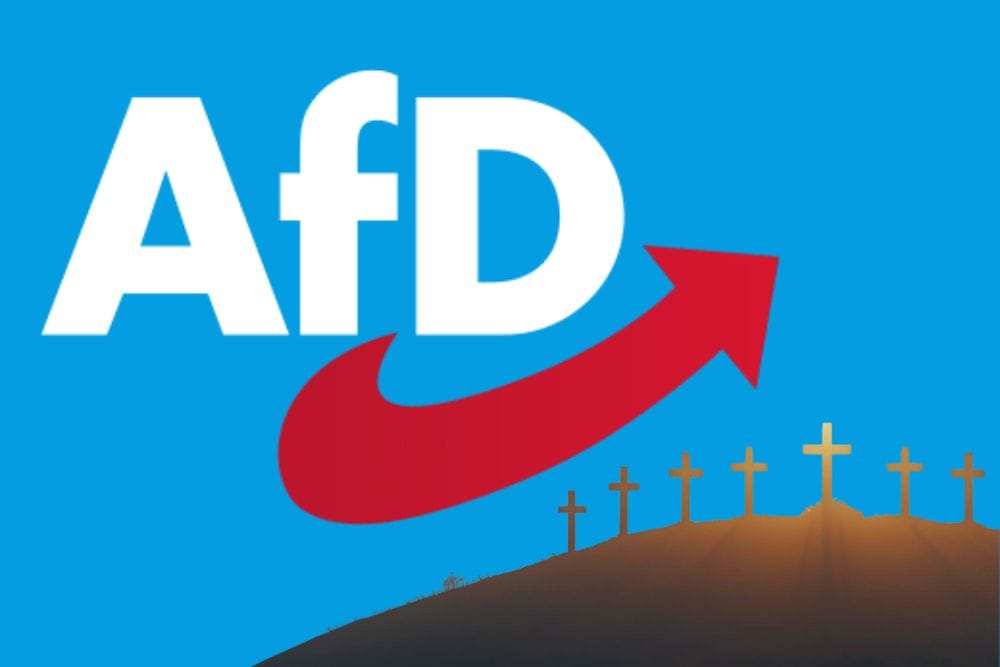
In a startling development, seven members of Germany’s conservative Alternative for Germany (AfD) party—four candidates and three reserve candidates—died within a narrow two-week window ahead of the September 14, 2025, local elections in North Rhine-Westphalia. The cluster of deaths has sparked widespread speculation and raised questions about foul play, despite official statements attempting to dismiss such.
The deaths, occurring between mid-August and early September, have disrupted election preparations, forcing municipalities to reprint ballots and reissue postal votes. The AfD, a polarizing force in German politics and recently classified as a right-wing extremist group by the German government spy agency (classification paused pending appeal), faces a critical test of its growing support in these elections.
Claimed Details of the Deaths
– Ralph Lange, 66, died August 28, 2025, in Blomberg. Claimed cause: natural causes tied to a pre-existing condition.
– Wolfgang Klinger, 71–72, died August 19, 2025, in Schwerte. Claimed cause: sudden death, attributed to natural causes.
– Wolfgang Seitz, 59, died August 21, 2025, in Rheinberg. Claimed cause: heart attack, linked to pre-existing conditions.
– Stefan Berendes, 59, died August 27, 2025, in Bad Lippspringe. Claimed cause: unexpected natural causes.
– René Herford, age unknown, died late August 2025, Oberberg County. Claimed cause: kidney failure from chronic liver illness.
– Patrick Tietze, age unknown, died late August 2025, Oberberg County. Claimed cause: Suicide.
– Hans-Joachim Kind, 80, died early September 2025, Remscheid. Claimed cause: Natural causes following a long illness.
Official Stance vs. Public Suspicion
Officials claim there is no evidence of foul play, citing natural causes, pre-existing health issues, or suicide. However, the proximity of these deaths—six within 13 days, followed by a seventh shortly after—has fueled international suspicion.
Stefan Homburg, a retired German economist, called the cluster “statistically almost impossible” in an August 29 X post, amplified by AfD co-leader Alice Weidel’s repost: “Four AfD candidates have died.”
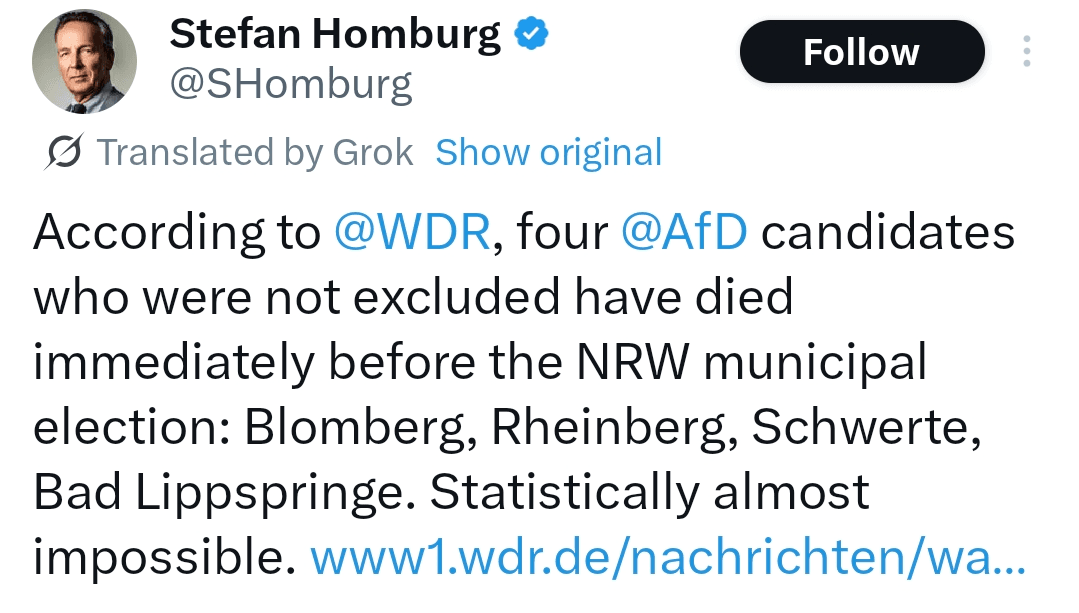
The addition of three more deaths has only intensified public unease.
Gottschalk attempted to urge caution against “conspiracy-theory territory” in his Politico interview, emphasizing that preliminary information points to coincidence, yet the lack of detailed public disclosures about the investigations has done little to quell doubts.
The statistical likelihood of seven AfD candidates dying within two weeks before the September 2025 elections is extremely low—on the order of 0.0001% or less. (Grok)
What is the AfD?
The Alternative for Germany (AfD), founded in 2013 as a Euroskeptic party, has grown into, alleged by the German spy agency, a far-right, anti-immigration force. Its popularity surged post-2015 migrant crisis, becoming Germany’s second-largest party in February 2025 elections, fueled by discontent with Progressive policies.
Despite sustained political and media attacks, AfD’s influence grows, especially in eastern Germany and upcoming North Rhine-Westphalia elections.
What’s Next?
Election officials are racing to finalize replacement ballots to meet the election deadline. Investigations into each death continue, with authorities promising updates. The AfD, already under scrutiny as Germany’s second-largest party after February’s federal elections, faces heightened attention as voters assess its platform amid this suspicious series of events.
The timing and number of deaths have left many in Germany and beyond questioning whether this is truly a tragic coincidence or something more sinister.
For now, answers remain elusive.