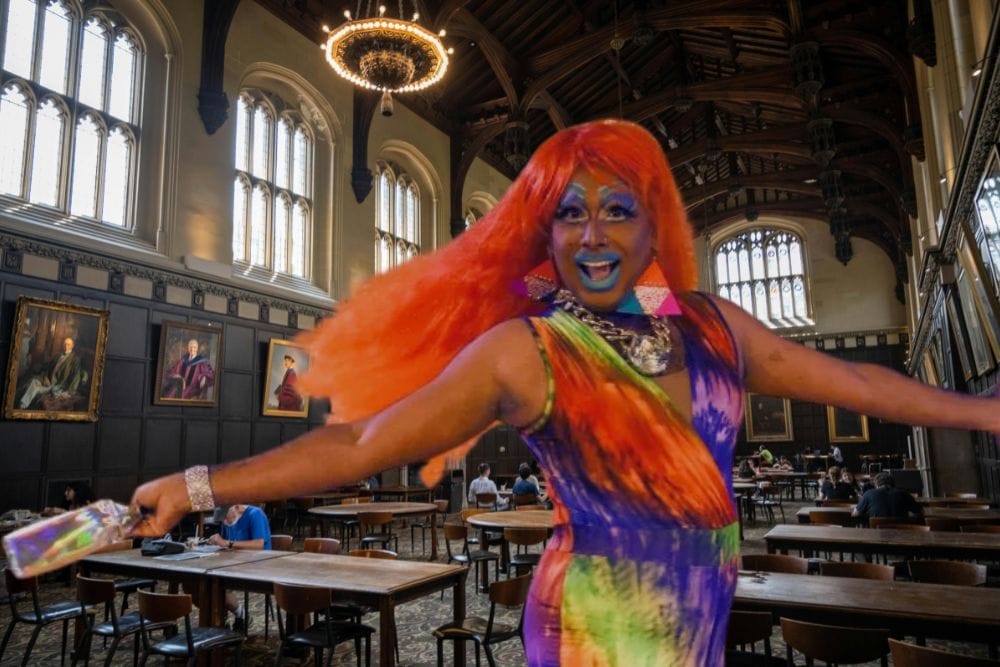
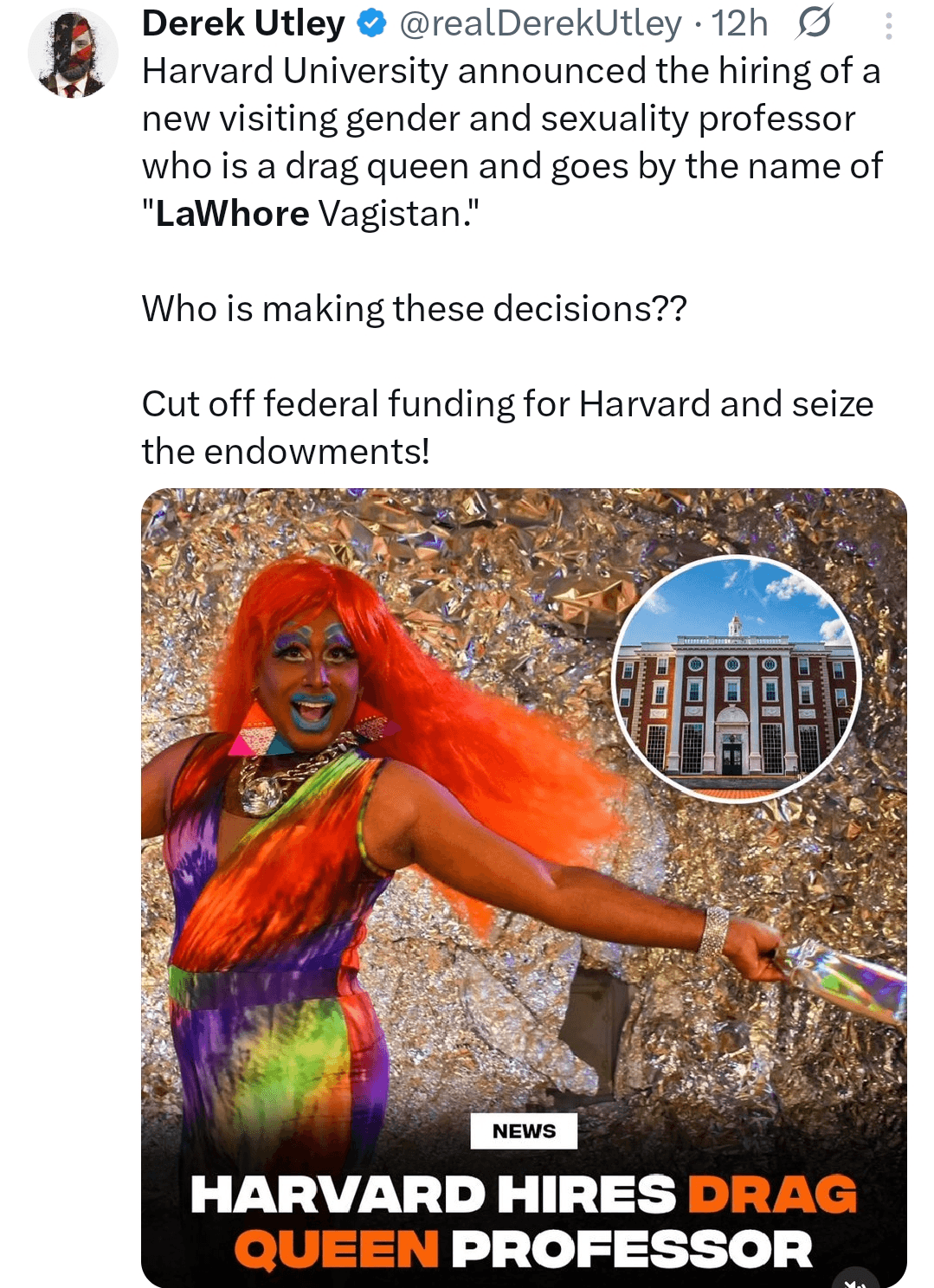
Harvard University has appointed a drag performer known as “LaWhore Vagistan” as a visiting associate professor in its Studies of Women, Gender, and Sexuality programme, sparking controversy over the Ivy League institution’s academic priorities.
Kareem Khubchandani, who performs under the provocative stage name, will join Harvard for the 2025-2026 academic year as the F.O. Matthiessen Visiting Associate Professor. According to the university’s July announcement, Khubchandani—an associate professor of theatre, dance, and performance studies, as well as race, colonialism, and diaspora at Tufts University—will teach “Queer Ethnography” in the autumn semester and “RuPaulitics: Drag, Race, and Desire” in spring.
Khubchandani, who holds a bachelor’s degree in sociology and anthropology from Colgate University, along with a master’s and PhD in performance studies from Northwestern University, has a decade-long history of blending drag performance with academia.
His 2020 book, *Ishtyle: Accenting Gay Indian Nightlife*, explores queer South Asian nightlife, and his work has appeared in journals such as the *Journal of Asian American Studies*.
In a 2015 “interview” with his own drag persona for Johns Hopkins University Press, Khubchandani explained the origins of his stage name:
“My name is LaWhore Vagistan, my preferred pronouns are ‘she’ or ‘aunty.’ I chose ‘LaWhore’ because my family traces its origins to Pakistan: Lahore is an important city in Pakistan, and well, I’m a bit of a whore. And Vagistan because I see the subcontinent as one, big, beautiful Vag … istan.”
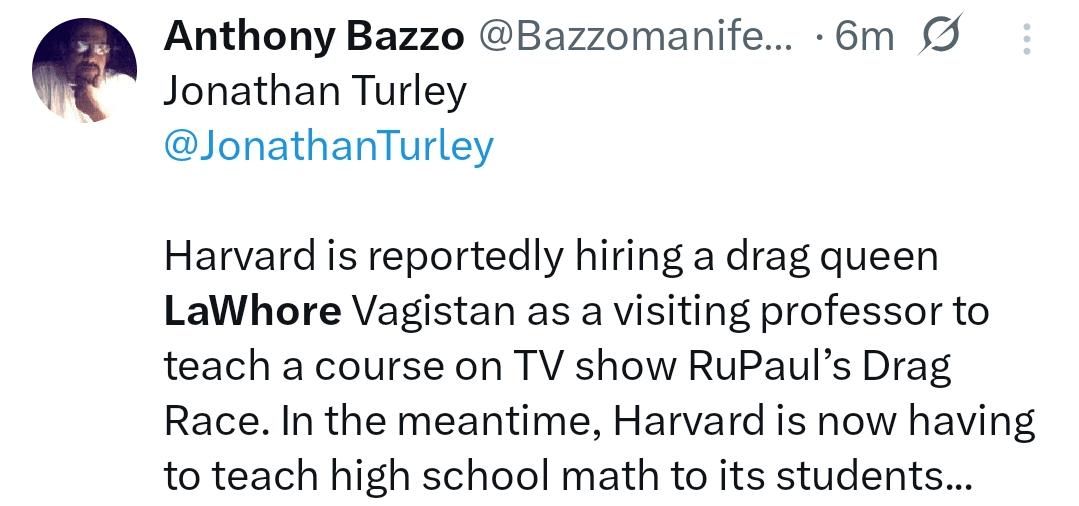
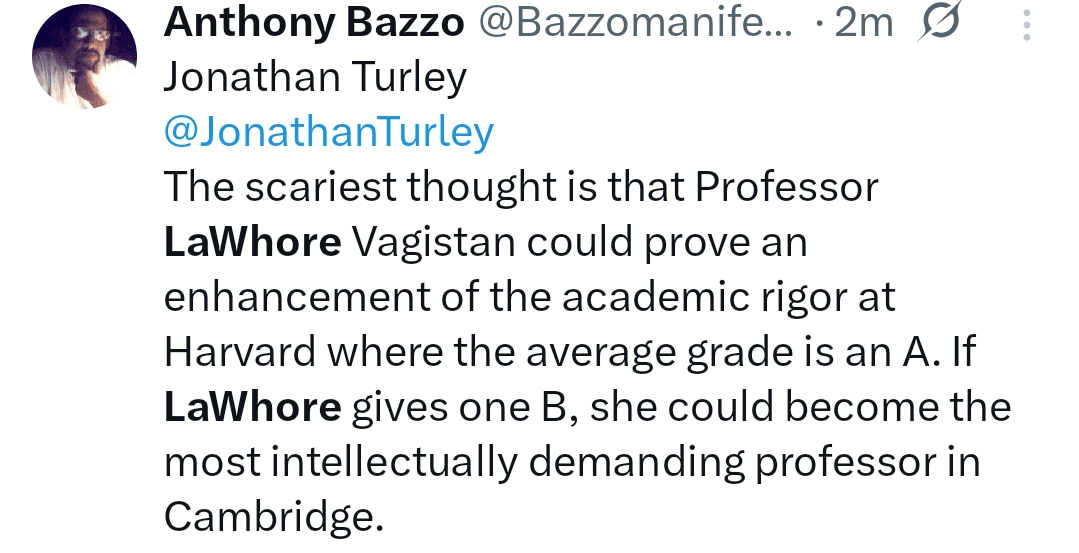
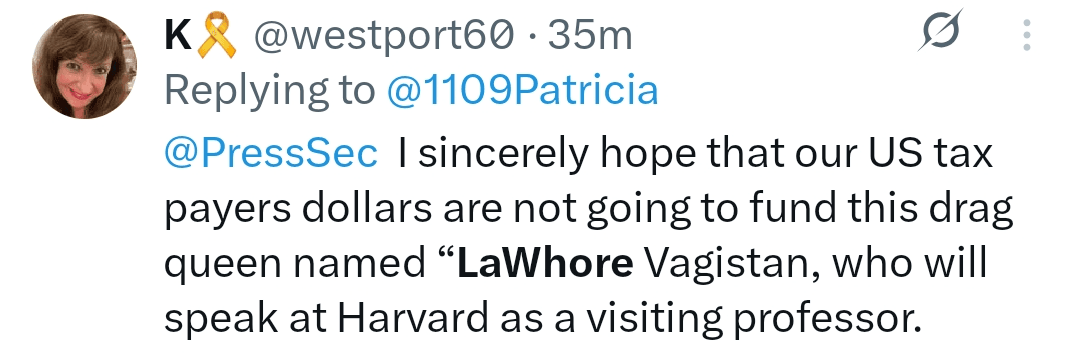
Commentary online has been sharp and concise:
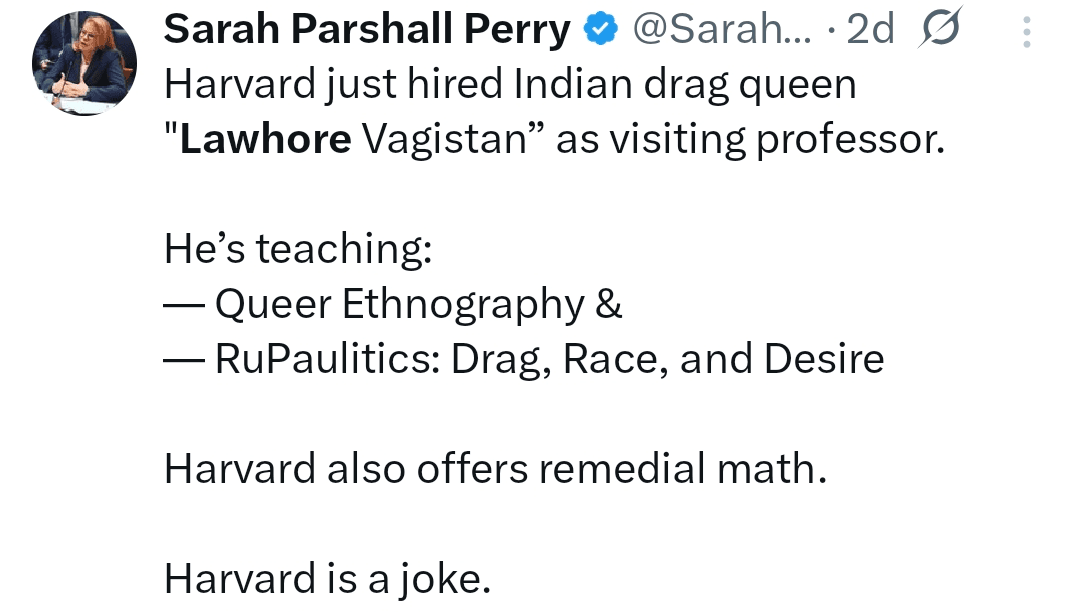
The appointment, which has drawn sharp criticism for introducing explicit sexual themes into higher education, comes at a tense time for Harvard.
The Trump administration has targeted the university with a crackdown on alleged antisemitism, freezing $2.2 billion in federal grants in April 2025 and threatening up to $9 billion more over its handling of anti-Israel protests following Hamas’s October 7, 2023, terror attack. Harvard sued the administration in response, accusing it of overreach to impose political views, including demands to audit faculty for plagiarism, ban face masks on campus, and dismantle diversity, equity, and inclusion programmes.
President Alan Garber, who is Jewish, has defended the university’s efforts to combat antisemitism through task forces and reforms, while rejecting federal control over teaching and hiring.
Critics, including conservative commentators, argue that hiring Khubchandani exemplifies the “ideological imbalance” the administration seeks to address, with one outlet decrying it as Harvard “bringing the nightclub to the classroom” at a time when families question the value of such elite education.
As New Zealanders follow global debates on academic freedom and campus culture, Harvard’s bold choice raises alarms about whether America’s top universities are prioritising provocative activism over traditional scholarship—potentially at the expense of taxpayer-funded research that benefits us all.