The view that celebrating incited violence is an extension of the incitement itself holds that such actions amplify harmful intent and normalise violent rhetoric.
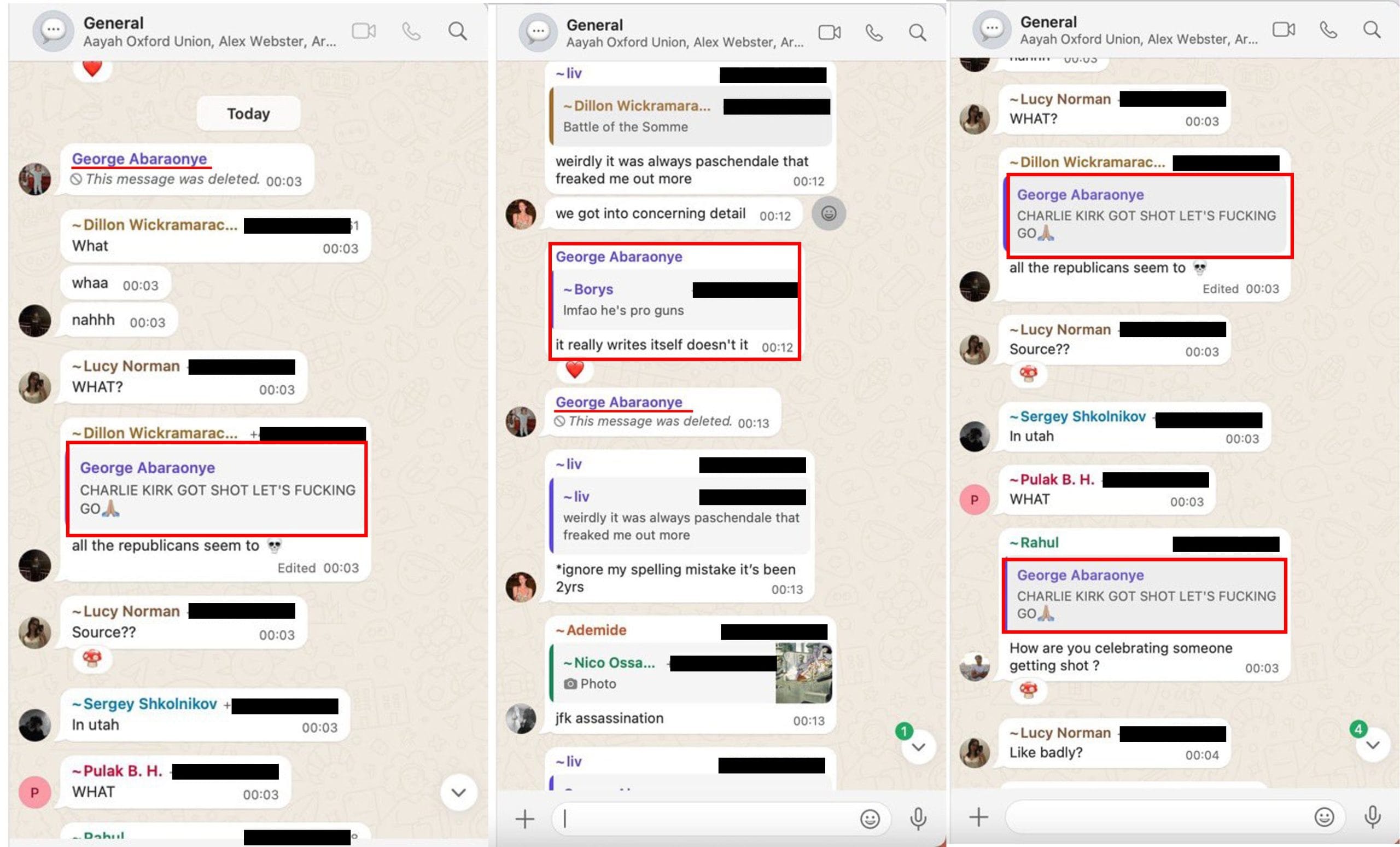
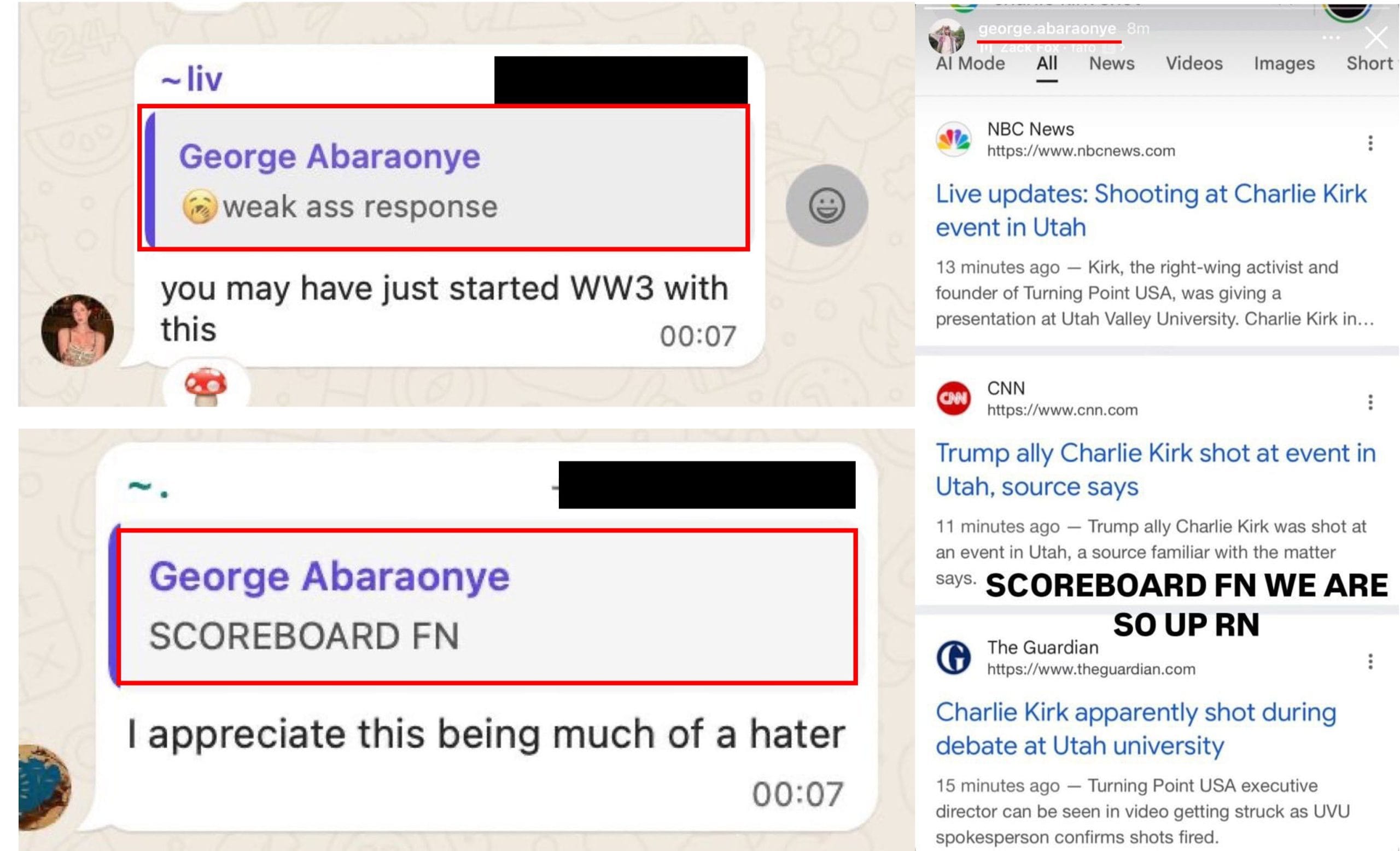
In the case of George Abaraonye, the former Oxford Union President-elect, his remarks celebrating the death of US conservative commentator Charlie Kirk—“Charlie Kirk got shot, let’s f****** go” and “Charlie Kirk got shot loool”—were seen by many as crossing a critical line.
Critics argue that celebrating violence, even if not directly inciting it, risks encouraging others to endorse or act on similar sentiments, perpetuating a cycle of harm.
Incitement to violence, as understood in legal and ethical contexts, involves encouraging or provoking illegal acts. In New Zealand, the Harmful Digital Communications Act 2015 addresses communications that cause serious emotional distress or incite harm.
Abaraonye’s public comments in a WhatsApp group and on Instagram, made as a leader of the prestigious Oxford Union, carried significant weight, amplifying concerns about their potential to inspire hostility in a polarised global climate.
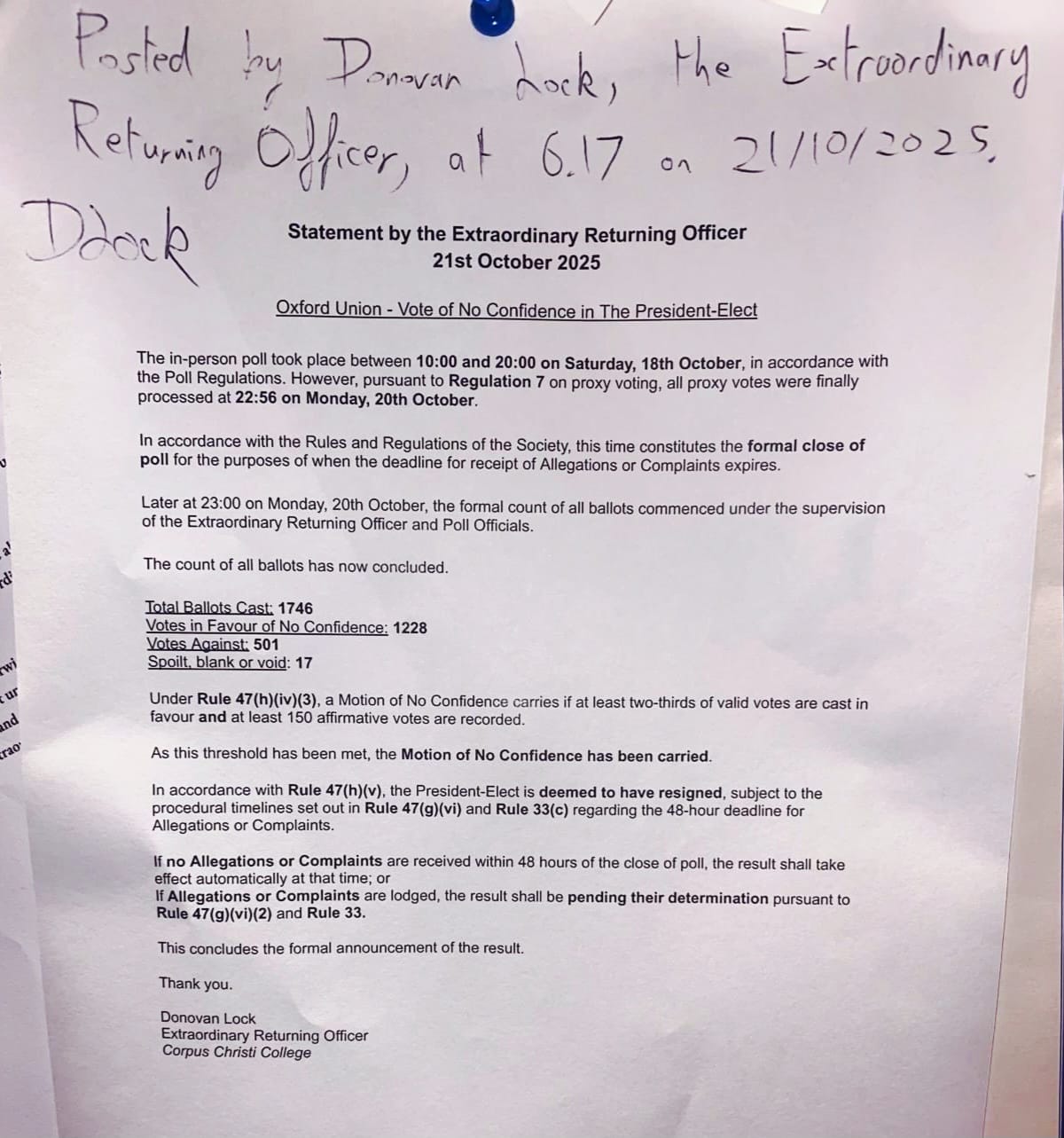
The process of Abaraonye’s removal began after widespread backlash prompted him to submit a motion of no confidence in himself on 13 October 2025, framing it as an act of accountability. The vote, held on 20 October, included in-person and proxy ballots.
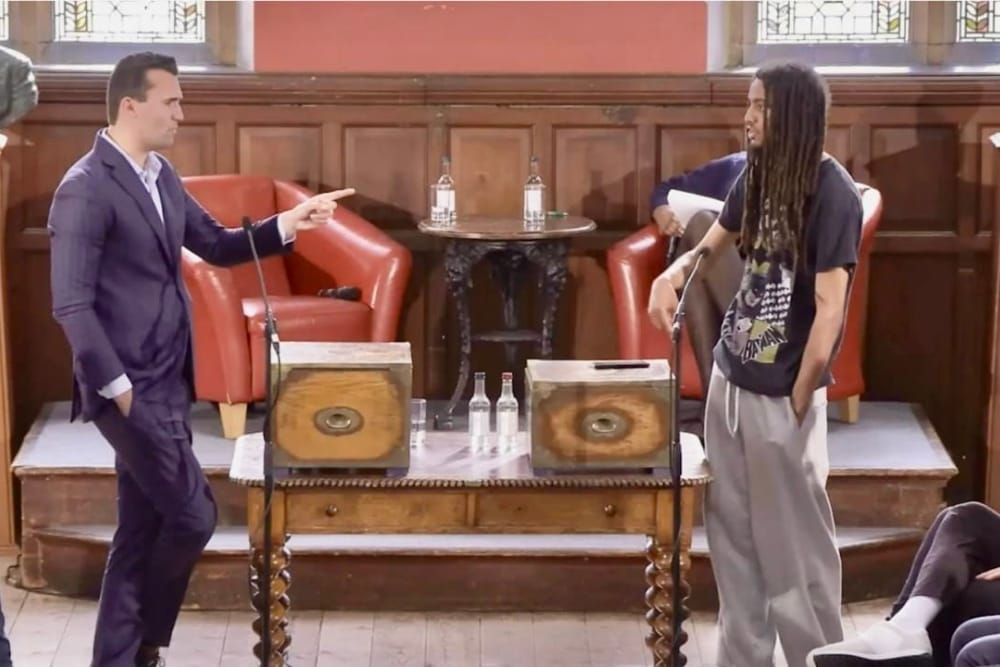
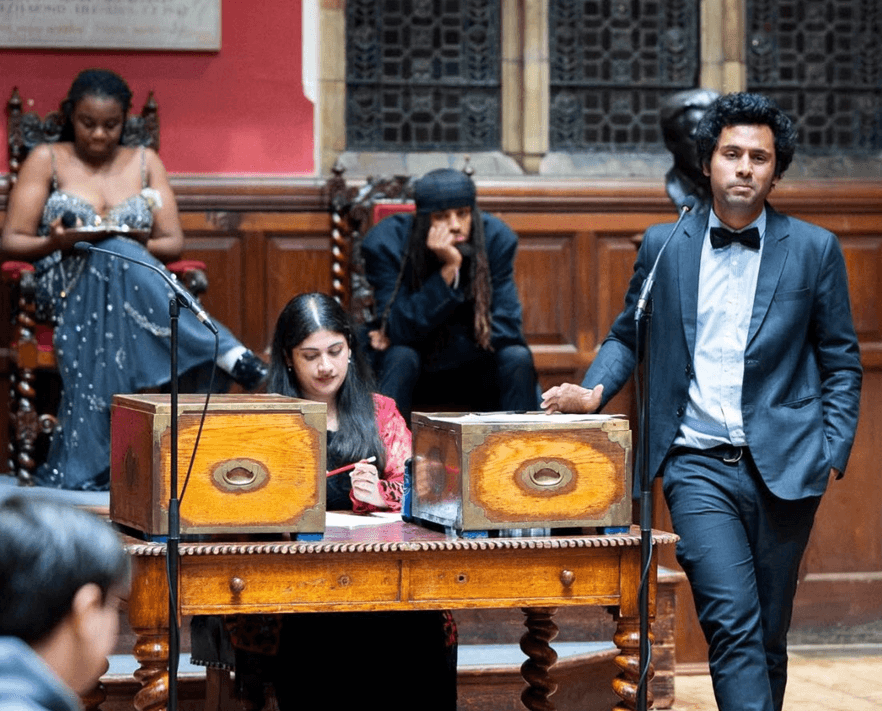
Disruptions led to a temporary suspension of the count, with allegations of intimidation and procedural issues raised by Abaraonye’s team.
On 22 October, results showed 70% of 1,746 valid ballots supported no confidence, surpassing the two-thirds majority required under Union rules. Abaraonye was deemed to have resigned, though he contested the outcome, alleging flawed procedures and unauthorised access to proxy votes. He has lodged a formal complaint, insisting he remains President-elect pending a disciplinary appeal.
The fallout—cancelled speaker engagements, a withheld £500,000 donation, and threats of a boycott by Kirk’s associates—highlights the consequences of Abaraonye’s rhetoric.
While free speech is a cornerstone of democratic societies, celebrating violence treads dangerously close to endorsing it. The Oxford Union’s decision to remove him reflects expectations of accountability from its leaders.
In New Zealand, where community safety and respectful discourse are valued, celebrating incited violence would likely be seen as crossing an ethical threshold, undermining principles of civil dialogue and public safety.