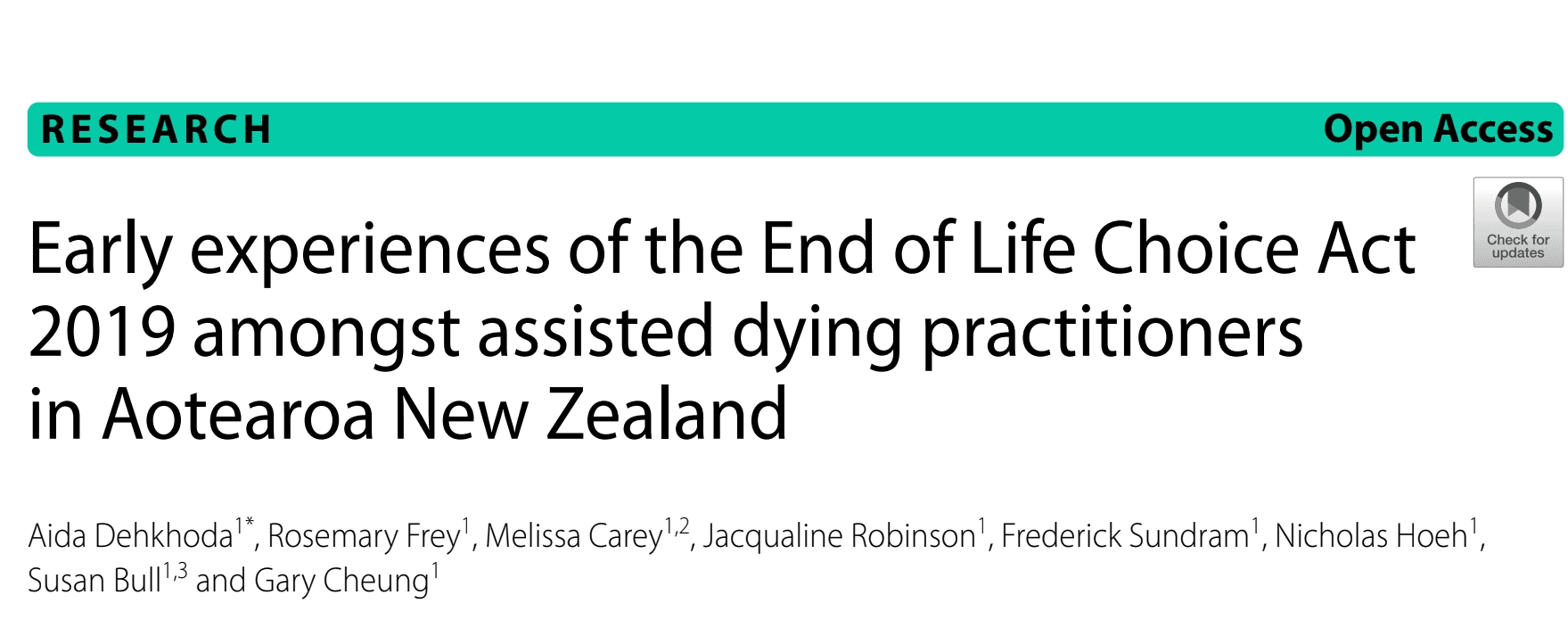

A recent study from Auckland University has revealed that fear, rather than physical pain, is a key driver behind many New Zealanders’ decisions to pursue euthanasia.
The research highlights that for some, particularly those accustomed to being in control of their lives—such as bankers, lawyers, and accountants—the prospect of losing autonomy is a source of profound anxiety and distress.
The study quotes a health practitioner who observed,
The fear of losing control is a huge factor. Many individuals I’ve worked with have been people who’ve always had a degree of control over their lives. The idea of not being in control is terrifying to them, causing significant anxiety and suffering.”
However, this fear of losing control is being classified as “unbearable suffering” under New Zealand’s euthanasia eligibility criteria, a classification that has sparked alarm among pro-life advocates.
The research notes that the criteria for assessing unbearable suffering are highly subjective and not clinically measurable, leading to confusion and challenges for health practitioners. “The subjective nature of evaluating the degree of unbearableness often results in confusion and poses challenges,” the study states.
Pro-life groups argue that equating the fear of dependency or loss of control with unbearable suffering risks sending a dangerous message to New Zealand’s elderly and vulnerable populations.
Is this really the pain and suffering we are trying to alleviate? Is death truly the solution to fear?”
asked a spokesperson for Voice For Life NZ.
What message are we sending to those who rely on others for care—our elderly, our disabled, those we should be supporting as a compassionate society?”
While the Auckland University researchers conducted the study to ensure “equitable and suitable service provision” and to support the expansion of euthanasia services, pro-life advocates are calling for a halt to its growth.
They describe the findings as “shocking and horrific,” in stark contrast to the researchers’ view of the data as a positive step toward refining the euthanasia framework.
As New Zealand grapples with the implications of these findings, pro-life advocates urge a renewed focus on caring for the vulnerable and addressing their fears through support and compassion, rather than offering proxy-suicide as a solution.
Click below to read research: