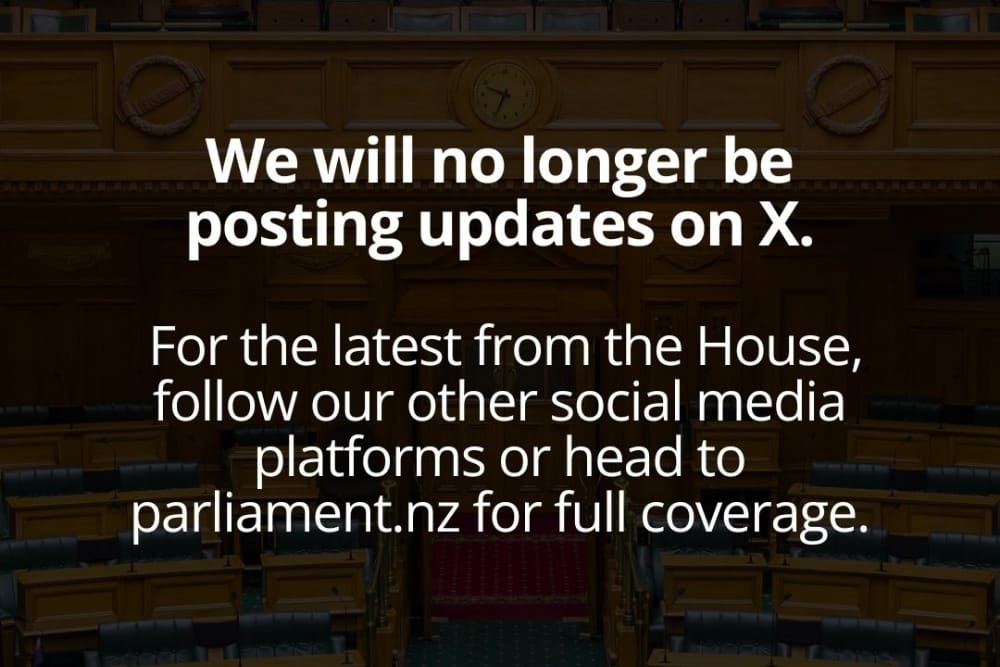
The New Zealand Parliament has stopped posting updates on X, formerly Twitter, allegedly due to ethical issues with the platform’s AI features.
The Office of the Clerk of the House announced the shift, urging followers to use alternatives like Facebook and the official Parliament website.
Clerk David Wilson cited reports of X’s AI chatbot, Grok, generating deepfake nudes and child exploitation material without proper controls, stating it no longer fits the organization’s values.
This follows exits by Leftwing parties Labour and the Greens in November 2024, and state-supported TVNZ, which called X “notoriously toxic” and a brand risk.
The moves highlight tensions with X’s direction under Elon Musk, who promotes it as a free speech haven.
Supporters of the Parliamentary Service see the decision as upholding safety and accountability, pushing for better social media regulation.
Critics, however, argue it hampers democracy by abandoning nearly one million Kiwi users on X during an election year, risking misinformation in the absence of official voices.
The Free Speech Union has criticized the Parliamentary Service for overstepping, insisting Parliament serves the public and urging law enforcement over withdrawal.
They emphasize X’s role in resisting government censorship, citing the “Twitter Files” revelations of 2022-2023, which exposed pre-Musk Twitter’s collaboration with U.S. agencies like the FBI to suppress content, including the Hunter Biden laptop story.
In contrast, X has fostered diverse, including conservative, perspectives often sidelined elsewhere.
Critics also highlight inconsistencies, noting Parliament’s continued use of Facebook despite its scandals, like the 2018 Cambridge Analytica data breach affecting 87 million users for political manipulation, leading to a $5 billion FTC fine, plus accusations of censorship and hate speech facilitation.
They further point out that the New Zealand government has wielded significant influence over Facebook’s content moderation through initiatives like the Christchurch Call, a 2019 pact led by then-Prime Minister Jacinda Ardern, which committed tech giants including Meta to swiftly remove terrorist and violent extremist content, effectively granting governments privileged channels for content takedowns and moderation oversight.
Questions are growing the selective exit from X, that, while maintaining ties with a platform where the government enjoys such censorship privileges, points to bias, potentially creating echo chambers that limit public discourse.
As elections loom, critics warn the move could undermine institutional trust and access to uncensored information in New Zealand’s digital landscape.