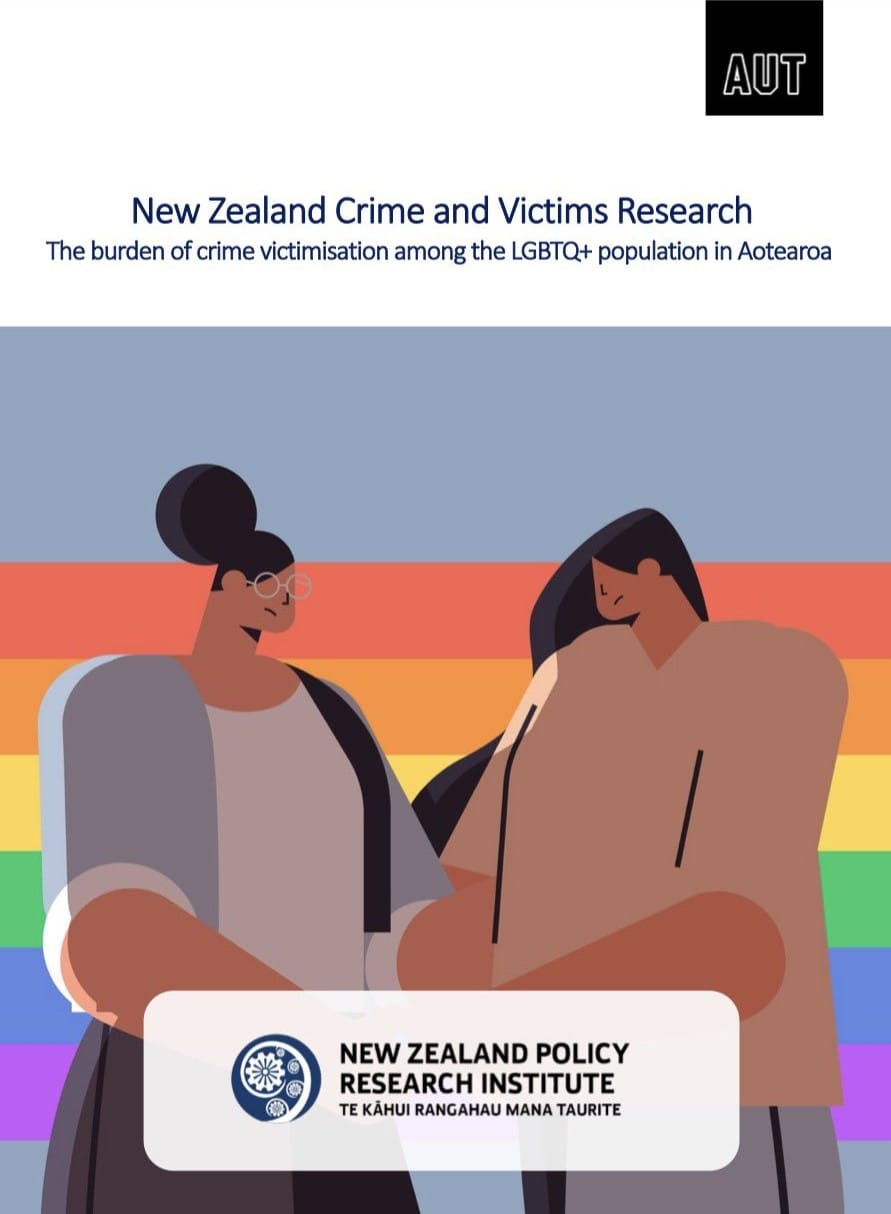
A recent study from the Auckland University of Technology (AUT), titled “Sexual orientation, crime victimisation, and relationship to the offender: Insights from New Zealand police records, 2014–2024”, reports that LGBT individuals face substantially higher risks of crime victimisation than heterosexual people, drawing on linked census and police data.
But Bob McCoskrie, National Director of Family First NZ, has critiqued the researchers’ selected findings, writing,
AUT have demonstrated how not to present research, and how it can be used to push a preferred narrative (as determined by the researchers in advance of publication). It also reveals that the unit is captured by ideology, not good public policy.”
The findings, which the researchers themselves note come with significant limitations due to data constraints, include:
- Lesbian women are on average 44% more likely, and bisexual women 98% more likely, to experience sexual assault than heterosexual women. Lesbian women face a 72% higher risk, and bisexual women 77% higher, of sexual assault by strangers.
- Lesbian and bisexual women are more than 60% more likely to experience serious violence than heterosexual women.
- Bisexual men are 30% more likely than heterosexual men to experience serious violent victimisation by strangers.
Click below for the study:
Concern for all victims of crime is paramount, a point McCoskrie emphasises: “We should be concerned with ALL victimisation.”
The study’s glaring weakness lies in its deliberate sidestepping of perpetrator identities, particularly in the context of intimate or intra-community relationships.
It mentions offender relationships only briefly, offering little detail on whether they are strangers or known, and virtually none on the sexual orientation of those offenders. This avoidance is particularly striking when it comes to violence within same-sex relationships or social circles, which international evidence suggests may be a significant factor.
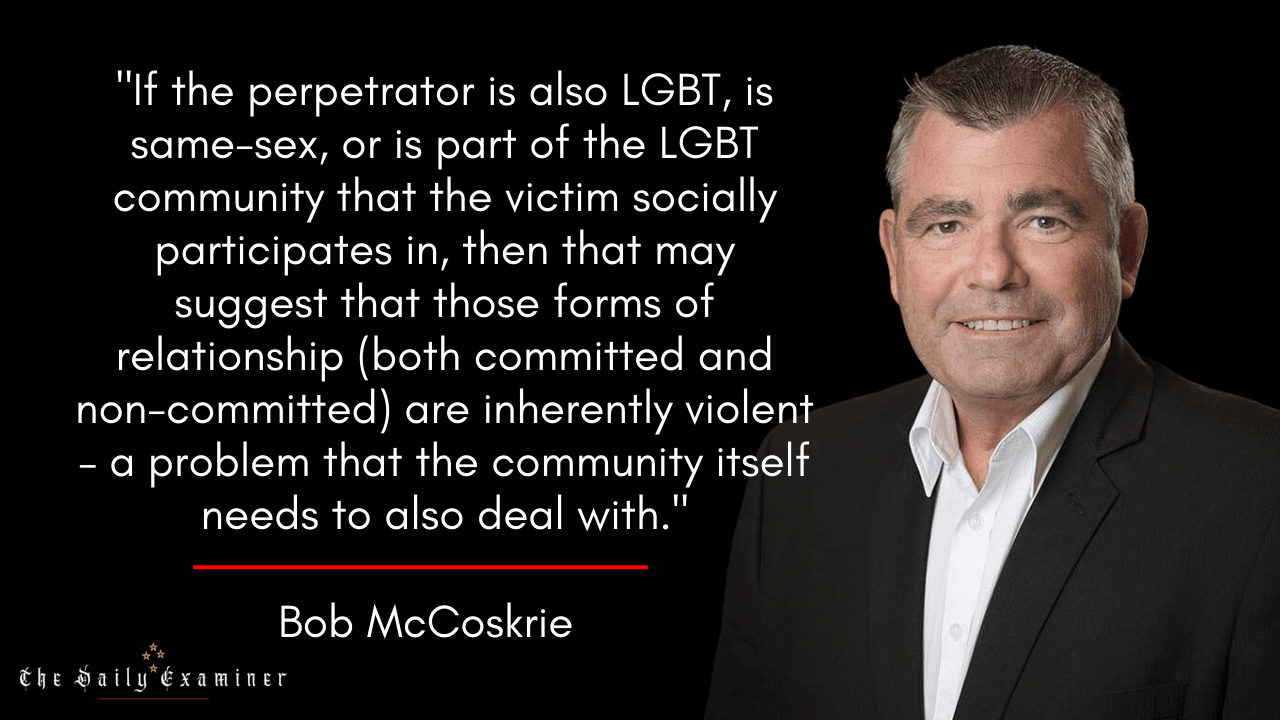
McCoskrie highlights the issue directly: “The problem is that the research only mentions in passing (with next to no detail) WHO perpetrated the crime. But isn’t that relevant? If the perpetrator is also LGBT, is same-sex, or is part of the LGBT community that the victim socially participates in, then that may suggest that those forms of relationship (both committed and non-committed) are inherently violent – a problem that the community itself needs to also deal with.”
McCoskrie goes further, noting, “The AUT researchers aren’t too keen on talking about this,” and points to his unanswered email queries to the researchers as evidence of their reluctance to engage on this front.
International research underscores why this omission borders on misleading. For example:
- A UK Galop study found that 46% of perpetrators of sexual violence against LGBTQ+ people were not heterosexual—in other words, from within the LGBT community itself.
- A San Francisco study indicated that one in three lesbians had been sexually assaulted by another woman.
- US CDC data from the National Intimate Partner and Sexual Violence Survey show lifetime intimate partner violence prevalence in LGB relationships as similar to or higher than in heterosexual ones: 61.1% of bisexual women, 43.8% of lesbian women, 37.3% of bisexual men, and 26.0% of gay men, compared with 35.0% of heterosexual women and 29.0% of heterosexual men. For severe violence, rates were comparable or higher among LGB adults (e.g., 49.3% for bisexual women versus 23.6% for heterosexual women). This highlights same-sex partners as perpetrators, a dynamic the AUT report conveniently overlooks.
These patterns point to intra-community and relational risks that deserve equal—if not greater—scrutiny, yet the AUT study steers clear, potentially to preserve a narrative of external victimisation alone.
This selective approach echoes broader concerns about ideologically driven messaging in New Zealand. In recent years, dangerous LGBT propaganda—particularly that targeting children through school programmes, drag events for kids, and related initiatives – has faced significant pushback.
Figures like Bob McCoskrie of Family First NZ, investigative journalist Ian Wishart, and Conservative Speaker Elliot Ikilei have been instrumental in exposing such material to the public. Their efforts helped spark widespread concern, leading to vocal public opposition that has contributed to policy shifts, including moves to remove gender ideology from the school curriculum under the current government.
The AUT researchers recommend hate crime legislation, ‘anti-bullying’ policies in schools, and targeted prevention for LGBT people. A fuller approach—as McCoskrie implies—would also examine “hate crimes, bullying and offences committed by those in the LGBT community as well as against them.”
He questions their willingness to confront this:
“But the AUT researchers would never admit that, would they?”
By systematically downplaying offender profiles and the evident risks of violence within same-sex relationships or LGBT social networks, the study not only risks presenting a skewed narrative but also undermines effective public policy.
Progress in reducing harm requires an unflinching look at all factors, including those that challenge ideological preconceptions, to ensure balanced protection for everyone affected—especially vulnerable groups like children who have already been at the centre of heated debates.