
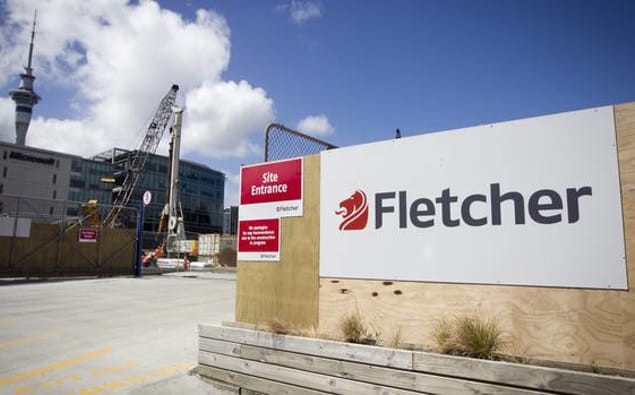
Fletcher Building, a pillar of New Zealand’s construction industry for decades, issued a stark financial update during its NZX investor day presentation today.
This company isn’t just another corporate entity—it’s been instrumental in building the nation’s infrastructure, the iconic landmarks of our cities, and the very framework that has supported New Zealand’s economic growth over generations.
Fletchers’ legacy in the construction sector is immense; their projects have shaped communities and set industry benchmarks.

Given this historical significance, the impact of any substantial loss reverberates far beyond mere numbers—it challenges a storied tradition of craftsmanship and innovation.
The company forecast significant items—costs ranging between $573 and $781 million—that will weigh heavily on its bottom line in the current financial year ending June 30, 2025.
These figures incorporate a mix of non-cash adjustments and tangible cash expenditures, including restructuring and redundancy costs, goodwill and brand impairments, closure expenses, as well as write-offs and provisions tied to onerous contracts and software projects related to enterprise resource planning.
Even before these significant items are deducted, Fletcher Building expects earnings before interest and tax (EBIT) of approximately $386.4 million to $391.4 million, signaling that the once-steady returns are now under considerable pressure.
CEO Andrew Reding’s strategic review has sparked the announcement of additional non-cash significant items totaling between about $250 and $440 million, compounded by expected cash significant items estimated at $50 to $60 million.
Earlier in the year, the company had flagged losses of $251 million stemming from challenges with Iplex Australia pipes and the disposal of Tradelink.
More recent provisions include about $12 to $15 million to address increased costs for completing the New Zealand International
Convention Centre, along with another $10 to $15 million earmarked for defending against legacy construction and western Australian plumbing issues. Institutional investors have already voiced concern over these “chunky” significant items, which appear to signal not only accounting adjustments but also operational setbacks that will ripple through future projects.
Looking ahead, the implications of such a loss are far-reaching. In a market where Fletcher Building has historically been seen as a bellwether for New Zealand’s construction and infrastructure sectors, these financial setbacks may slow the pace of new projects and necessitate a deeper focus on restructuring.
Industry analysts like Shane Solly of Harbour Asset Management note that the company is deep in a turnaround at the lower end of its investment cycle.
The considerable weight of these significant items suggests a period in which value extraction might be delayed, and management could find itself having to recalibrate its strategy toward business streams that offer more sustainable growth.
The historical contribution of Fletchers to New Zealand’s development cannot be overstated.
They’ve not only built buildings and infrastructure but have also underpinned a legacy of industrial innovation and resilience.
A loss of this scale could shake the confidence of both domestic and international investors and might force the company to adopt a more cautious and conservative approach moving forward.
The potential for slowed growth, reduced investments in large-scale infrastructure, and prolonged periods of uncertainty could have broader implications for the construction landscape in New Zealand.
Ultimately, while Fletcher Building may emerge stronger after addressing these structural challenges, the road to rebuilding trust and stability will likely be long and complex—a poignant reminder of how deeply intertwined the fortunes of a nation are with its historical industrial giants.