I’m Sick Of People Weaponising A 3-Paragraph Deal To Divide Our Country.
Are you one of the many fifth-generation Kiwis whose ancestors built this nation with sweat and steel, farming side by side and forging a country with an agricultural backbone?
Because if you are, you’ve probably noticed something unsettling, our country is being divided more every year over a document that was never meant to rule us forever.
I’ve read the Treaty of Waitangi since Year 6.
Not the fairy-tale version — the actual 1840 text.
Three paragraphs.
A deal.
Not a blank cheque.
Māori chiefs gave the Crown governance over settlers. In return they received protection and British citizenship. That’s it. No co-governance. No veto rights. No modern reinterpretations. Just an agreement so people could live and farm in peace.
Today, that deal is being abused. A word meaning chieftainship is stretched into control over water, roads, councils, and coastlines.
Three Waters becomes Treaty-based theft. Separate local government wards become Treaty-based apartheid.
None of this exists in the text.
The Waitangi Tribunal has become a gravy train. Thousands of claims, billions paid, and still it never ends. Ordinary working Kiwis fund iwi corporations richer than most families, all justified by alleged breaches over land that was willingly sold generations ago.
And here’s a fact that’s almost never mentioned, the so-called “principles of the Treaty” didn’t even exist in law until 1975 — 135 years after the Treaty was signed. Parliament invented that concept in the Treaty of Waitangi Act 1975 when it created the Waitangi Tribunal.
The Act did not define what those principles were.
It simply left them open to interpretation.
In the late 1980s — particularly after a 1987 Court of Appeal decision — courts and officials began expanding and interpreting these “principles”.
But even today there is no single, settled, written list of Treaty principles in statute. They are loosely worded, change over time, and mean whatever judges, tribunals, or governments decide they mean at the time.
So when people talk about “Treaty principles” as if they were agreed in 1840 and are fixed and sacred — that simply isn’t true. They are a modern legal invention, layered on decades later, and endlessly expandable.
No modern democracy runs its future governance through an open-ended 19th-century racial agreement forever. Nations acknowledge history, reconcile, then move forward under equal law. We seem determined to do the opposite.
And here’s the part no one likes to talk about, the South Island wasn’t even governed by consent from hundreds of chiefs. It was claimed by right of discovery. Yet now we’re told the entire country must be re-engineered around a document that never mentions partnership and never promised shared sovereignty.
I read the Treaty again today.
It refers to the country as New Zealand not Aotearoa.
It says governance was ceded.
It says the Crown had first right of land purchase.
It says Māori became British subjects, equal under the law.
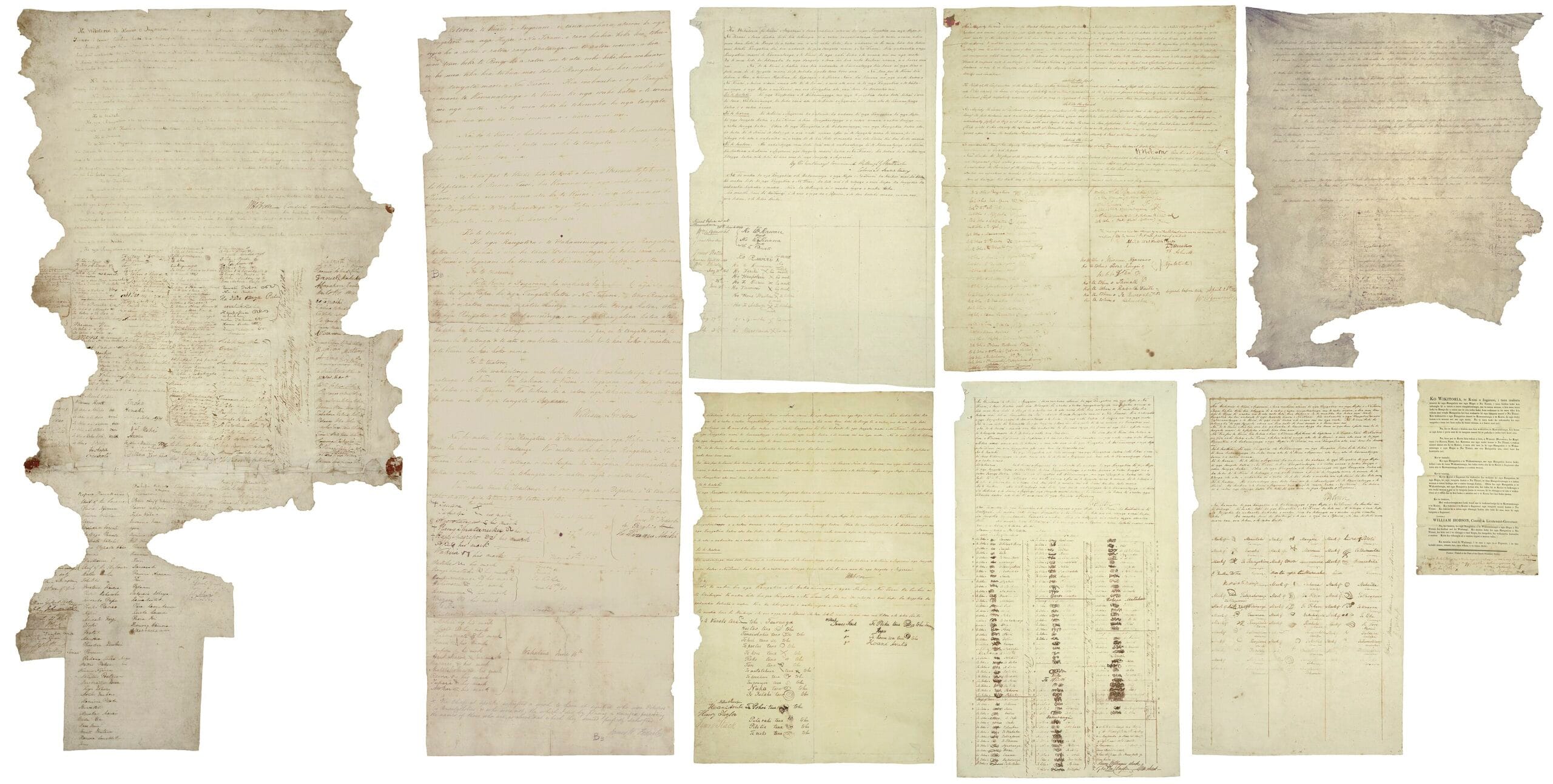
That was the deal. No amendments. No invented “principles”. No race-based supremacy.
What we see now isn’t honouring the Treaty, it’s exploiting it. Road blocks, occupations, demands for control over assets and spectrum, all justified by interpretations that didn’t even exist until the late 20th century.
If the Treaty is about fairness, then it must apply fairly to everyone alive today, not punish people for ancestors they never had, and not privilege people for ancestry alone. Justice that depends on bloodlines isn’t justice at all.
And the final insult? It’s a tiny modern elite pushing these demands onto everyone else, including immigrants and families with no colonial history at all. While claiming moral authority over a past they themselves are descended from on both sides.
What worries me most isn’t the past, it’s what we’re normalising for our kids. Teaching them that law, opportunity, and voice depend on ancestry is the opposite of unity.
If this was really about healing, it would have ended by now. Processes that never conclude aren’t reconciliation, they’re revenue streams.
I’m Kiwi.
I’m proud.
And I’m done.
The Treaty was a deal, not a suicide pact for our people. New Zealand needs a real constitution or agreement, written, clear and amendable by future generations.
One that locks in equality, ends race-based law, and stops 1840 ghosts and 1970s inventions from dividing us in 2026.
A country obsessed with ancestry can never be united, but a country built on equal citizenship can be.
One document.One law.One vote.One New Zealand.One future.
Chur.
By Phillip Conroy